
By IndyKids Reporters
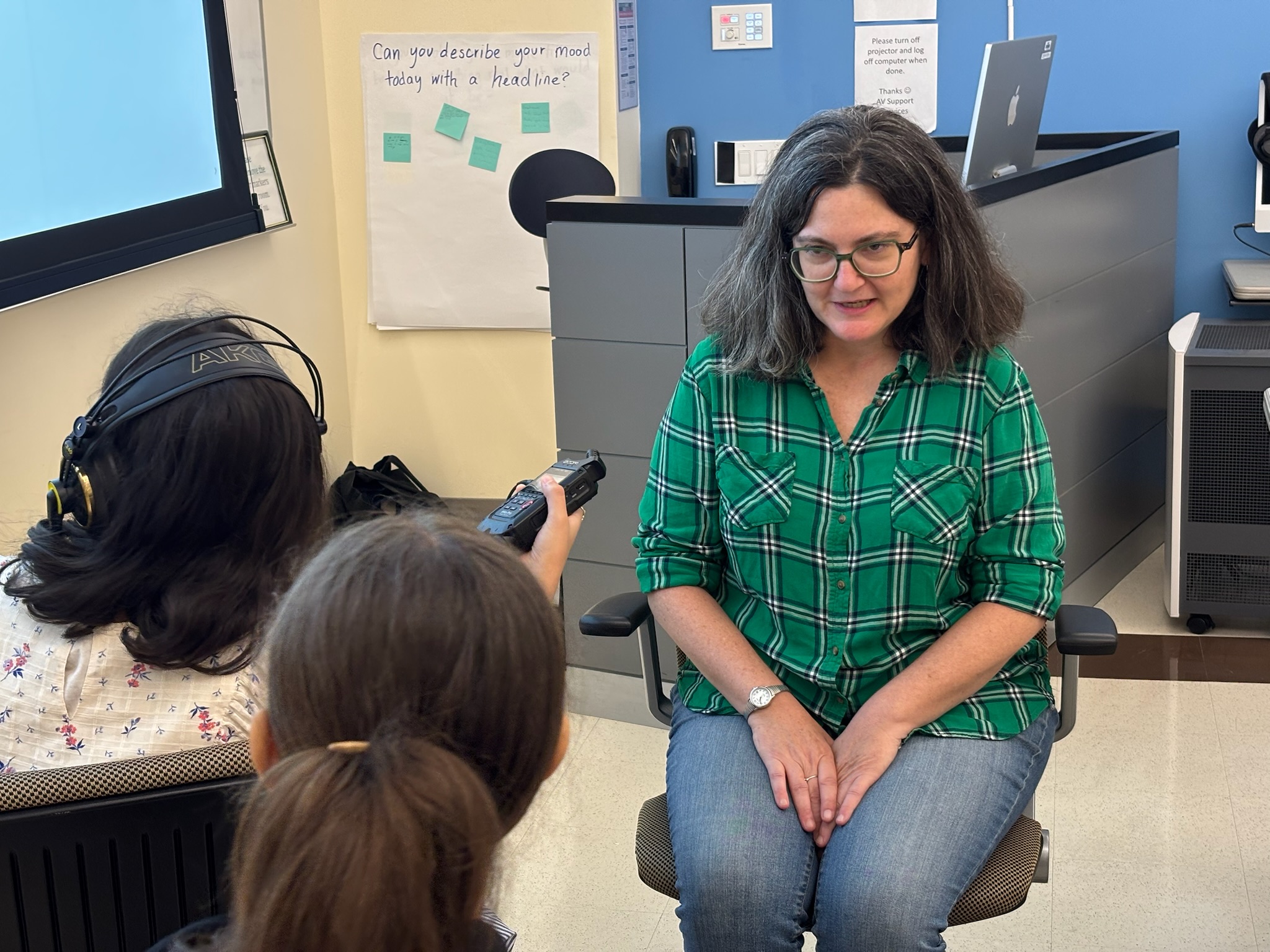
What is your name and job?
Renée Feltz: My name’s Renée Feltz, and I’m a longtime investigative independent journalist. I was the news director at Democracy Now! for many years. Currently I’m doing freelance reporting.
When did you find out you wanted to be an investigative journalist?
Renée: I decided to become an investigative journalist when I was reporting and interviewing people in prison and on death row, and so there was a chance they could be executed. As a reporter, I was curious if that was fair or not. There’s a lot of things that can come up when someone is sentenced in a trial, and some of it can be wrong or inaccurate. And so I started to wonder: How could I look at these things that might be unfair? And I realized that I would probably have to have investigative skills, and so that’s when I decided to learn more about how to study wrongful convictions and things like that.
When you were young, what did you think you would be when you grew up?
Renée: I thought about being a teacher, because I like history and I thought I could teach it. Another thing was a lawyer, because, for better or worse, I would argue sometimes with my parents, and they would always tell me I’d make a good lawyer. I decided I wanted to be a journalist because I’d like to make the world more informed.
Where did you study?
Renée: I first studied journalism at [Houston’s public radio station] KPFT, where I got a chance to try it out and interview people, kind of like this. I learned in the newsroom.
But after that, I got more curious about how to dig deeper in the stories I was doing, and that’s when I went to the Columbia Graduate School of Journalism and studied investigative reporting. When I was at journalism school, I learned serious investigative techniques, such as how to file public records, how to look through court records, and how to find other things that people might want to keep hidden or covered up. But I do think it’s important to know that you can learn a lot about journalism without having to go to school for it.
You focus a lot on the topics of immigration, mass incarceration, and environment in your journalism. What inspired you to do that?
Renée: When I was in Texas as a journalist, I was surprised to realize how many people were in basically immigration jails. Texas has more [immigration detention centers] than any other state in the country, and so I started learning more about the business of immigrant detention. At the time I started looking at it, not very many people realized what was happening.
You referred in your question to mass incarceration. And so, there’s still a lot of people in prison, but as some people are being taken out of prison, the facilities still wanted to keep them full, and so they started to put immigrants in them, and private corporations started to run them instead of the government. So, as I learned more about that, I became more interested in what shapes our immigration policies, and that overlaps with mass incarceration.
And then I think we all think about the climate these days, too. If we’re living in a world where we use a lot of oil and all of these things, we should know where it comes from and the impact that it has.
What do you enjoy most about your job?
Renée: Right now I am a freelance journalist, and I work on many projects. One is with a place that’s called Solitary Watch. That means that we’re watching what’s happening with people who are held by themselves when they’re in prison or in Immigration and Customs Enforcement (ICE) jail. And it’s hard to endure that, so hard that the United Nations says that if you’re in solitary for longer than two weeks in a row, that can be considered torture. But a lot of people don’t really realize that, including people that work at these facilities. I like to raise awareness about that, and I also want to help reduce the suffering of people.
But it’s a difficult topic, because it’s hard for them to go through and talk about. Sometimes I think, “Oh my gosh, this is really hard or sad.” But you have to also ask what gives them hope, because, yes, things are bad, but people are working to change it. I like finding their driving motives to keep working for change. It inspires me, but it also inspires the people that might read or see my stories.
What’s the weirdest thing about your job?
Renée: I’m kind of a shy person. I like books. And when I do my job as a journalist, it’s almost like I put on a superhero cape, and I can go up and talk to almost anybody. And so, it’s kind of weird that I’m shy, but I have this job where I have to approach total strangers and ask them hard questions.
What are some challenges you face as an investigative journalist?
Renée: When you’re an investigative journalist, it can be a little tricky to uncover things, and it can be really challenging to connect the dots.
Another challenge that journalists face these days is a presidential administration that’s more antagonistic toward journalists. It’s important to know that journalists have rights, and that even if that happens to you, you can stand up against it and hold the government accountable if they’re abusing, if they’re overstepping what they can do. The main thing to remember is that [journalists] fight back and they usually get justice. And it’s a reminder of how important the things that we’re reporting on are.
What are some topics you’ve investigated outside of immigration and mass incarceration and environmental justice?
Renée: There are many topics. One had to do with the economic collapse in 2008, and it was really complicated. And I was there at the investigative unit at The New York Times, which is mostly old white men, and they would have me make phone calls for this story, and I was a young woman, and when I would call people on the phone, they would be like, “I don’t want a subscription.” They thought I was calling to get them a subscription, like not for challenging questions. The investigation that was linked to the economy was part of a series that got nominated for one of the top prizes in journalism, a Pulitzer Prize. So I was honored to be looking at that issue of economic collapse and who was responsible.
What advice do you have for young people who want to be journalists?
Renée: Just do it. You don’t have to sit around and make 500 hours of plans, or stay up all night being nervous. Once you do it a couple times, you’ll feel more comfortable, and you’ll be less nervous, and you’ll get better and better at it, and you’ll actually start to enjoy it.
And when people say they don’t like your suggestion of what you want to report on, you have to listen to them. You have to think about, “Well, how can I make my story a little bit more interesting?” Because you’re not just trying to do reporting as a journalist for yourself. You’re trying to do it for your readers and your viewers and your listeners, so you just have to keep them in mind.


