
By AVA GOETZ, Age 9
THIS YEAR!
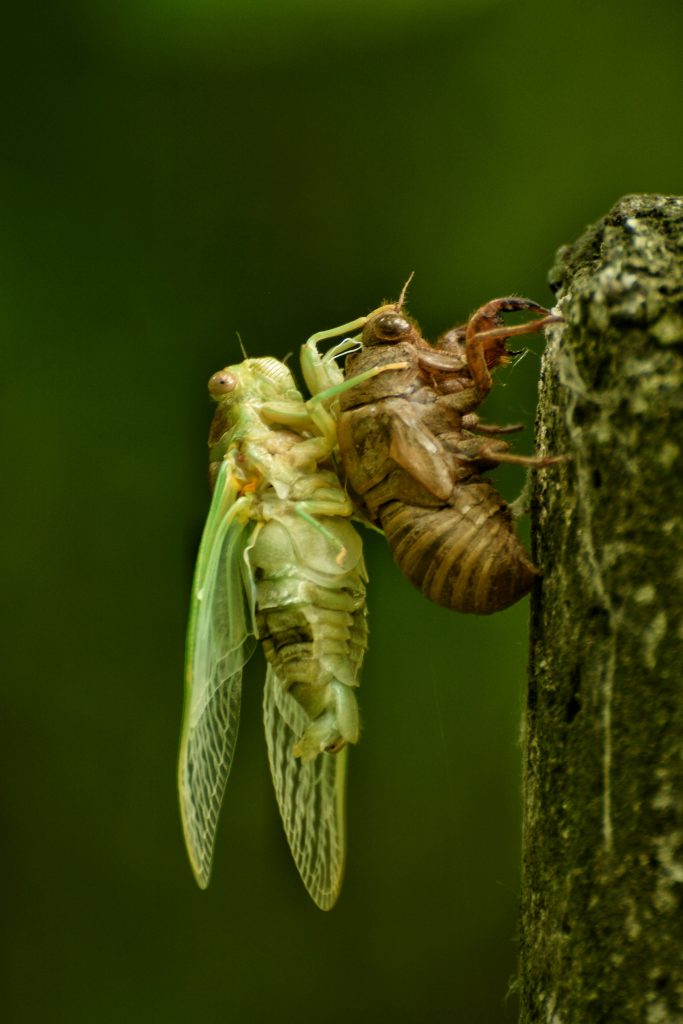
This year is special. Why? The answer may surprise you. This summer, more than a trillion cicadas will emerge in some areas of the country.
The two main categories of cicadas are annual cicadas (also known as dog-day cicadas) and periodical cicadas, found in the central and eastern areas of the United States and only present in North America. Annual cicadas can be seen every year, while periodical cicadas only emerge from the ground every one or two decades. This is a double-brood year, the last we will experience until 2037.
The life cycle of a cicada includes three stages: the egg stage, during which female cicadas lay up to 400 eggs placed on dozens of trees; the nymph stage, when, after six to 10 weeks, young cicadas hatch and soon bury themselves into the ground to drink the liquids of plant roots; and the adult phase, when the nymphs come out of the ground, shed their shell and, soon after, mate, lay eggs and start the whole process over again. Annual cicadas typically live between two and five years, while periodical cicadas typically live between 13 and 17 years.
Cicadas have been a source of fascination since ancient times because of their peculiar life cycles. In antiquity, some societies thought of the insects as symbols of rebirth. In ancient Chinese cultures, rulers looked up to cicadas, sometimes even using cicada patterns on their clothing.
Scientists theorize that the periodical cicadas’ distinct and oddly timed cycles relate to avoiding predators. Male cicadas produce their distinctive buzzing and clicking noises by vibrating their membranes on their abdomens. These sounds serve as a warning or a call to attract mates. Female cicadas make noise without tymbals by using their wings, a process called crepitation. Others vibrate the ground to make sound. At around 90 decibels, cicadas can be as loud as a motorcycle.
Periodical cicadas have red eyes, black bodies, red/orange veined wings and legs, and they are smaller than annual cicadas. Annual cicadas have dark green to black bodies and green veined wings.
Turtles, fish, birds, skunks, raccoons, dogs, and even humans benefit from cicadas as a food source. According to Bugible.com, an interesting cicada recipe to try is chocolate-covered cicadas. “You’ll need 8 squares of good-quality semi-sweet chocolate and ~ 30 dry-roasted cicadas. First, roast your cicadas for 15 minutes at 225 degrees F. Meanwhile, melt the chocolate in a double-boiler over low heat. Dip the cicadas in the chocolate, place on wax paper, and refrigerate until hardened.” Yum!


