
By Maryam Sattaur, age 12
Did you know that over 800 languages are spoken in New York City? You can hear many of them in Queens, from Spanish to Gaeilge, from Norsk to Tagalog, according to the Endangered Language Alliance.
Before it was Queens, the land was originally inhabited by the Lenape, an Indigenous tribe. Then the area became a Dutch colony in the mid-1630s before it was taken over by Britain in 1664. According to EBSCO, “Queens became part of New York City in the late 19th century and has since evolved into a vibrant urban center celebrated for its remarkable ethnic diversity, regarded as the most ethnically diverse urban area in the world.” By the 20th century, major transportation infrastructure development projects rapidly developed the borough. As reported by the World Population Review, Queens has a population of over 2.3 million people as of 2026.
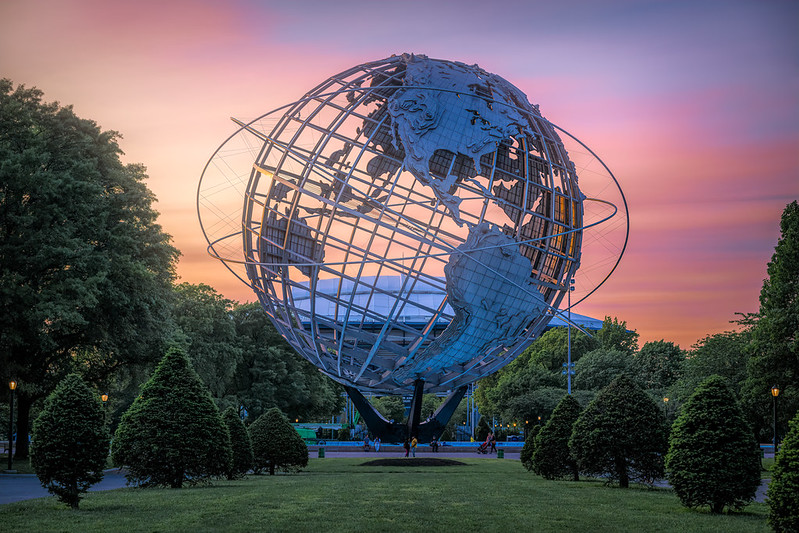
As one of those 2.3 million, I greatly enjoy the diversity in Queens. For example, my borough is full of delicious foods. Jackson Heights, Corona, and Elmhurst are home to 28% of the city’s restaurant workforce, according to Queens-based food journalist Caroline Shin in Eater. Queens is home to many attractions like the Museum of the Moving Image, Kaufman Astoria Studios, and the Unisphere, to name a few.
My family and I share many special memories over many generations who’ve lived in Queens. My uncle Saadi Hamid said, “The Queens Night Market is very unique to Queens. All around the world it’s known as one of the best night markets.” My cousin Aidan Hamid, a lifelong resident of Queens, reminisced, “With friends, I would go to Flushing, and we would do karaoke. I really think about that a lot. It’s just a lot of bonding and community that we built in Queens.”
People travel from across the city to Queens for baseball games, tennis matches, music, and lantern festivals. “You have the world in your backyard. It’s so nice that people from so many different backgrounds come to this place and call it home. They live together despite their differences,” said my mother, Dr. Salma Waly, a longtime resident of Queens.
However, in recent years, many of those people and businesses from around the world are being displaced. This year, CBS News reported, “Mega-development is coming to western Queens… City Planning says it will add 15,000 units of housing, the most for a neighborhood rezoning in the city’s history.” As Queens faces for-profit gentrification projects, many who previously lived and worked in Queens can no longer access important services and resources there. “We’re not against development. We’re just against unaffordable development,” community advocate Jenny Dubnau said to CBS.
Diversity is essential to Queens for both its economy and character. Immigrants play a key role in creating communities and driving entrepreneurialism. The diversity built from many different nationalities shapes Queens into a “multifaceted, world-class metropolis,” as Shin writes.
“The people in Flushing, many of whom are immigrants both from Taiwan and from mainland [China] have come to the United States, and they’ve changed the face of Flushing,” Sen. Toby Ann Stavisky explained to Eater. “It’s prospering because of immigrants.”
Despite this prosperity, immigrants are in danger of being priced out of their livelihoods and cultural communities. As Aidan Hamid said, gentrification isn’t just “a Queens problem,” but “an American problem.”
When I go to Rockaway Roti Shop and bite into traditional Guyanese foods, I’m reminded of the many stories and the courage of all the immigrants that came to this borough. As Queens changes, let’s remember to preserve the culture and history for the next generation and beyond.


