By Kimberly Ragolia, age 12

Could you ever imagine that a highway, of all things, could have a huge historic and economic impact on the United States? Celebrating its 100th year, Route 66 is a popular highway that had a large impact on the country, stretching from Los Angeles to Chicago. According to the National Park Service, Route 66 once spanned 2,400 miles. But its fame is not rooted only in its geography.
Route 66’s symbols, attractions, and songs are associated with the “American dream,” as demonstrated by the famous 1961 song “Route 66” performed by Chuck Berry. Route 66 has changed small communities and U.S. history itself, and yet has faded from use.
Susan Croce Kelly, a journalist and author of two books about Route 66, told IndyKids in an interview that in 1920, after World War I, when the U.S. Army had seen Germany’s large roads in Europe, they came back and wondered if they could have those kinds of roads in the United States. The federal highway system was created in 1926, a network of local roads that was connected and funded in order to create Route 66. It became important to the communities and businesses along the route, especially people fleeing the Dust Bowl, a drought that quickly developed into a dangerous environmental threat during the Great Depression.
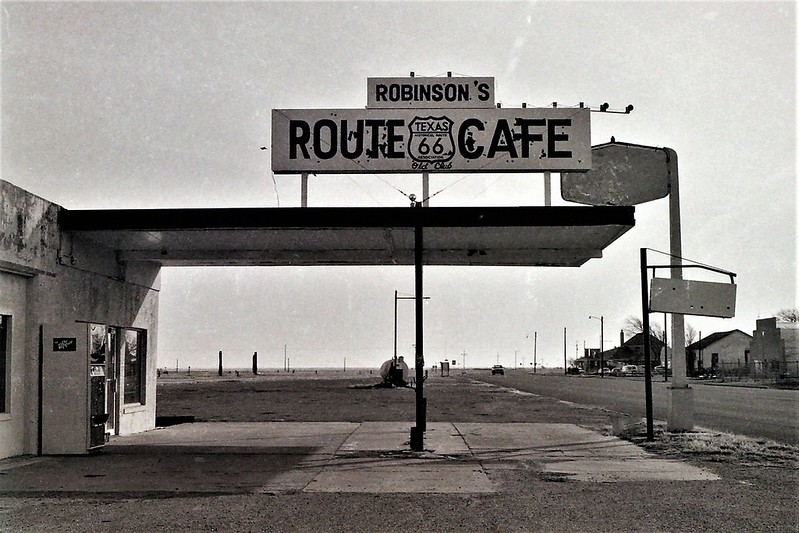
Route 66 was very rugged until 1938, when it became the first highway in the country to be completely paved, according to the Federal Highway Administration. Tourists flooded the highway to reach popular destinations such as Disneyland – and along the way would pass smaller and more isolated communities, giving them a great amount of business. Less advertised attractions included Cadillac Ranch, which featured 10 Cadillacs facing nose-down in a wheat field and large, colorful characters along the road, according to CBS.
During World War II, Route 66 stopped drawing in as much business due to a lack of tourist traffic and became more of a military transport route instead. Between 1945 and 1955, car ownership rapidly increased, almost doubling, from 25.8 million cars registered to 52.1 million, according to the National Park Service. “There were cars in the United States from 1893, but those were expensive, and there weren’t very many of them. Then, in 1908, Henry Ford introduced the Model T, and everybody could have a car,” Kelly said. This meant more traveling, especially through Route 66.
However, Route 66 also had its dark side. Jim Crow laws were used to prohibit Black Americans from using certain parts of the route and directed them where they could drive freely.
Later on, when Dwight Eisenhower became president in 1953, he supported the construction of new interstate highways. The residents of Williams, Ariz., a town along Route 66, were so upset about the interstate’s development that they tried to prevent its construction but ultimately failed.
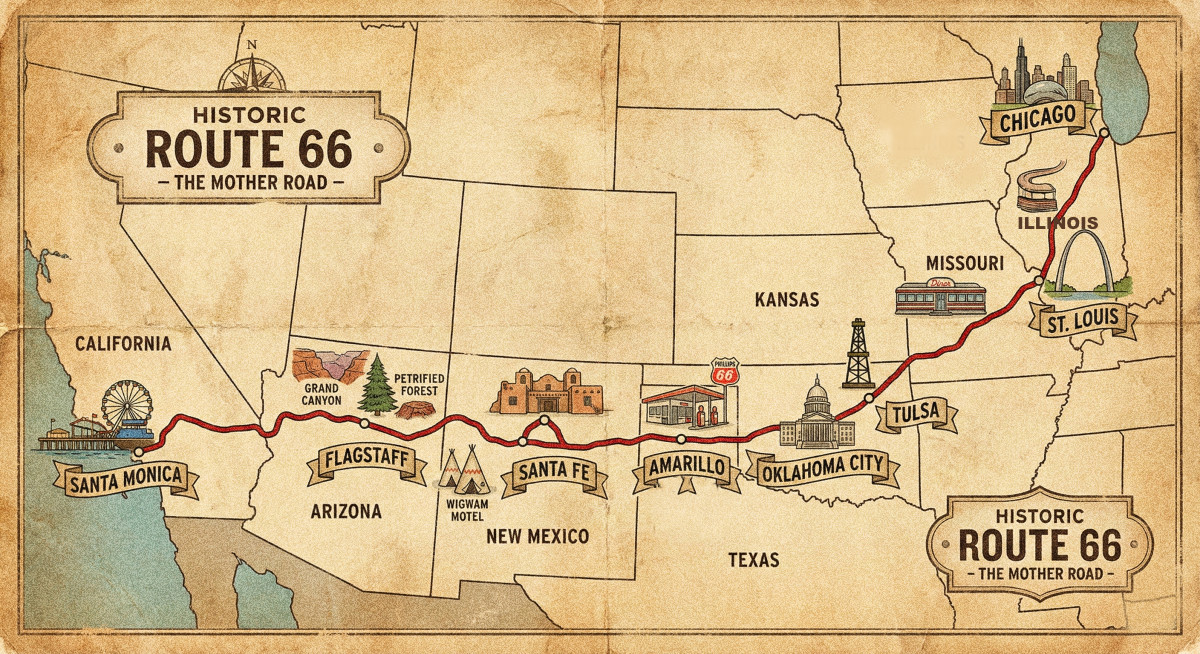
Over the next 30 years, five new interstates would be established. These new interstates overshadowed and replaced Route 66 because they were much larger and faster routes for tourists, which was prioritized at the time. Route 66 only had two lanes, making it accident-prone to the point that it was nicknamed “Bloody 66,” according to Kelly. Route 66’s eventual decommissioning – or retirement from use – was partially due to these two factors, she said.
In 1990, after the decommissioning of the highway was announced, people started to acknowledge its social and historical impact and tried to preserve and advertise the road to draw back the attention it once had. The supporters’ long attempts paid off when in 2008 Route 66 was recognized as a world monument and put on the 100 Most Endangered Sites list, according to the National Park Service.
Route 66’s considerable impact makes it deserving of more recognition especially among the youth, who should know about such an important piece of American history. Route 66 changed not just the economy, but U.S. culture and its people, from drawing in customers to small businesses to having songs and books dedicated to it – and most importantly, bringing people together.