
By GIBRAN FREILLA-WILLIAMS, Age 13, and IndyKids Staff
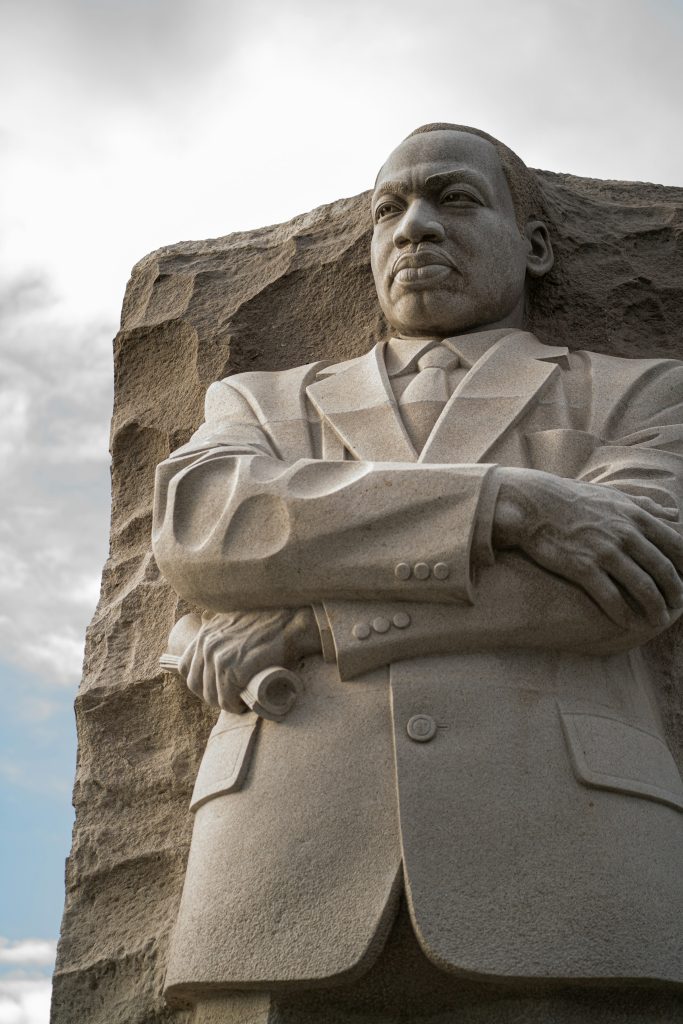
In 1968, Dr. Martin Luther King Jr. launched his final campaign, which was referred to as the Poor People’s Campaign. The campaign was a multiracial group effort of people who fought for economic justice for all Americans through lobbying and direct action protest. The original Poor People’s Campaign aimed to end economic inequality.
The campaign had three phases. The first phase was to gather in and occupy the National Mall in Washington, D.C., to push politicians to pass the Economic Bill of Rights. The Economic Bill of Rights included anti-poverty efforts like low-income housing and a guaranteed annual income, according to the Civil Rights Movement Archive. The second phase was mass civil disobedience all around the country. The third phase required boycotting of major companies. Unfortunately, Dr. King was assassinated before he could see the completion of his campaign.
A number of his peers continued the work after his death. Then, 50 years later, in 2018, a new multiracial group of people announced a new Poor People’s Campaign: A National Call for Moral Revival. The key issues of the new Poor People’s Campaign are racism, poverty, militarism, military spending and environmental destruction. Some of these issues, like the fight for environmental justice, are problems that King could not foresee.
Rev. William Barber and Rev. Liz Theoharis are the leaders of the current Poor People’s Campaign. They are both Protestant ministers who work for social justice. Barber believes in King’s idea that the “triplets of evil” are militarism, racism and economic injustice. Theoharis argues for ideas that would bring us together around a living wage, healthcare, voting rights and immigration reform, according to Inequality.org.
The effects of their work are seen in the Biden-Harris administration’s student debt cancellation and investment in green infrastructure, both responding to the demands of the Poor People’s Campaign. The campaign has built coalitions in 40 states to continue King’s dream.
The Poor People’s Campaign: A National Call for Moral Revival organized an event called “Mass Poor People’s & Low-Wage Workers’ Assembly & Moral March on Washington D.C. & to the Polls” on June 29, where they called on “people of moral conscience to … uplift and center the needs of the over 135 million poor and low-wage people and workers across the country” and to “launch outreach to 15 million poor and low-wage infrequent voters ahead of the 2024 U.S. elections and beyond.”
The event, which, according to Common Dreams, drew thousands of supporters, highlighted the power of the poor to change the country for the better. It came days after a dramatic debate between presidential hopefuls President Biden and former President Trump and just one day after the Supreme Court ruled that cities punishing people for sleeping in the streets—even when there is no right to shelter—is not cruel or unusual punishment. At the Moral March on Washington, Theoharis said in a speech, “Those most impacted by injustice, organizing together, mobilizing together, and voting together, can force the changes that we know we need that will be good for everybody.”


